Tree removal, pruning and stump grinding across Colchester and north Essex
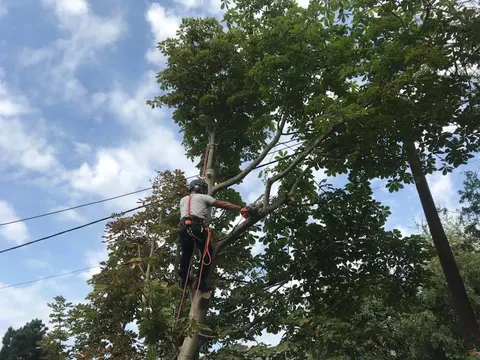
Send a photo of your tree for a quick provisional quote, any time of day, or call us during opening hours to talk the job through. Whether it is an overgrown conifer blocking the light, a stump that needs grinding out or a limb brought down by the wind, you will know what the work involves and what it is likely to cost before anything starts.
Tree work
Every job is planned around the tree, what is near it and how the waste gets out. Here is a look at the kind of work involved.

Crown reduction brings a tree's height and spread down while keeping a natural shape, rather than leaving flat-topped stumps of branches. Tree pruning Colchester
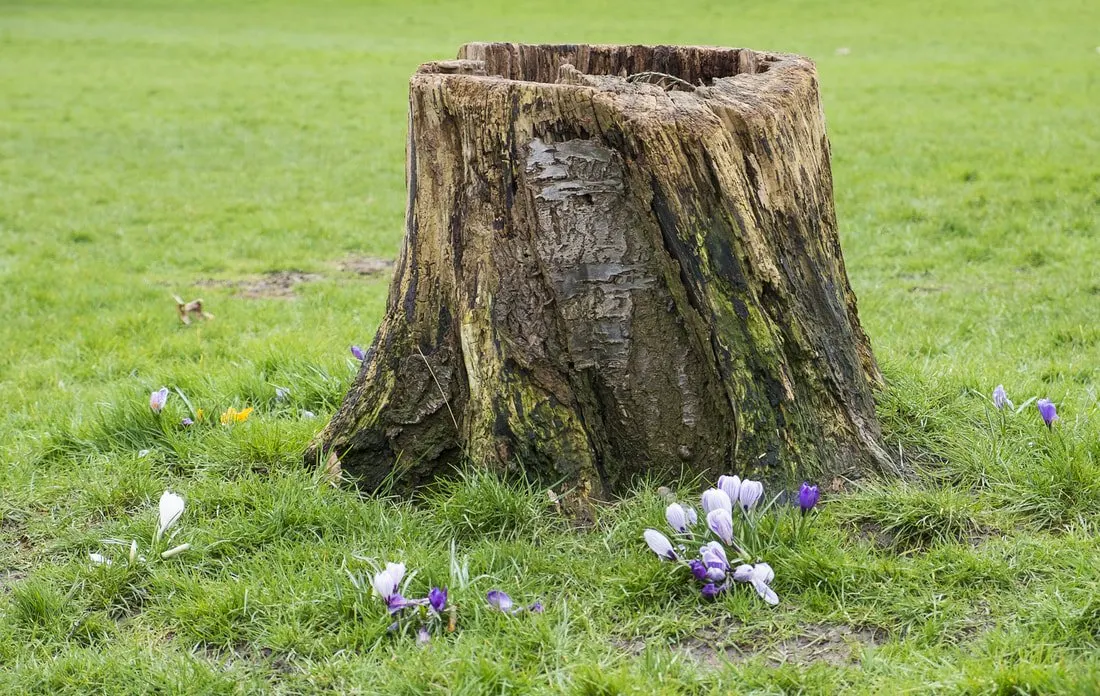
A leftover stump gets in the way of mowing, replanting and new turf. Grinding takes it below ground level so the space can be used again. Tree removal Colchester
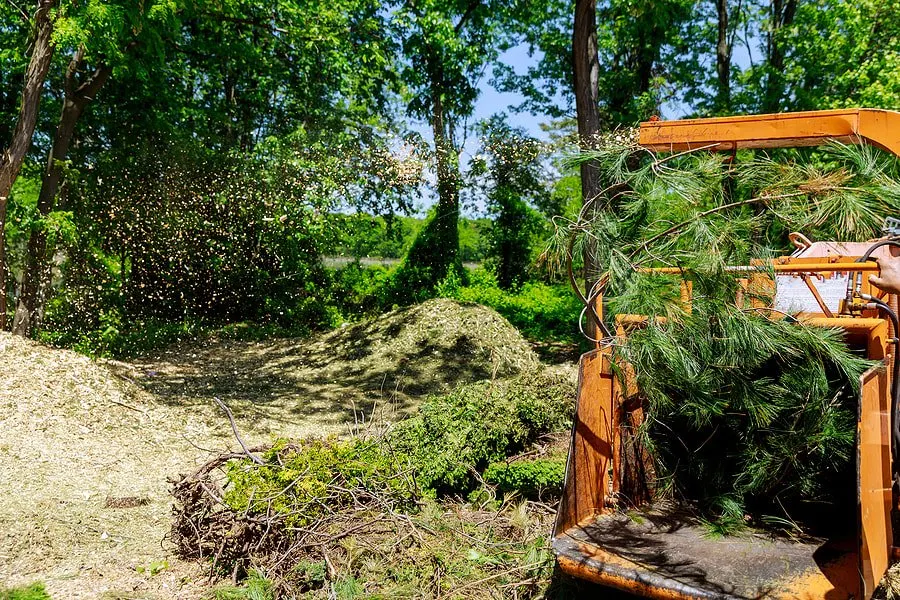
Brash goes through the chipper as the work progresses, so the garden is not left buried in cut branches. Wood chipper and operator
A short montage of tree work from climbing and reduction through to clearing up.
Domestic gardens, driveways and rental properties across Colchester and the surrounding villages, with all work carried out by NPTC-qualified, insured tree surgeons. For schools, estates, agents and site managers, see commercial tree surgery in Colchester.
Plenty of trees in and around Colchester are legally protected, and it is not always obvious which ones. Protection comes in two main forms, and both are handled by Colchester City Council for properties within the city's area.
A Tree Preservation Order (TPO) can cover a single tree, a group or a whole woodland, including trees in private back gardens. Where a TPO applies, you generally need the council's written consent before pruning, felling or uprooting the tree. There are limited exceptions, such as work to a tree that is dead or presents an immediate danger, but even then notice is usually still required.
Colchester has a number of conservation areas covering its historic centre and several older neighbourhoods and villages. Inside a conservation area, you normally need to give the council six weeks' written notice before carrying out work on a tree with a trunk 75mm or more in diameter, measured 1.5 metres above ground. That gives the council time to decide whether the tree should be protected with a TPO.
Carrying out unauthorised work on a protected tree can lead to prosecution and a fine, and responsibility can fall on the property owner, not just whoever did the cutting. It is worth checking before booking any work. If consent or notice is needed, we can make the application to the council for you, free of charge, as part of the quote.
This is a general summary rather than legal advice. If you are unsure whether a tree is protected, contact Colchester City Council's planning team directly before any work is carried out.
Under the Wildlife and Countryside Act 1981, it is an offence to intentionally damage or destroy the nest of a wild bird while it is in use or being built. The main nesting season runs roughly from February to August. Tree work can still take place during those months, but trees and hedges need checking for active nests first, and work may have to wait if one is found.
For many deciduous trees, late autumn and winter is a practical time for pruning and reduction: the leaves are off, the structure is easier to see and there is no nesting to work around. There are exceptions. Cherries, plums and other ornamental Prunus are usually pruned in summer, because cutting them in winter raises the risk of silver leaf disease entering the wounds.
Pollarding is a different technique again, cutting a tree back hard to the same points on a repeating cycle. If you are weighing up the two, our guide to pollarding versus pruning explains the differences.
No two tree jobs are priced the same, which is why a photo is the quickest way to an accurate idea of cost. The main factors are:
Size and height. A large tree that has to be climbed and taken down in sections takes far longer than one that can be felled in a single piece.
Access. A rear garden with no side access means every branch and log has to be carried through the property or lowered over a boundary, which adds labour. Driveways and side gates make a real difference.
What is nearby. Trees close to houses, garages, greenhouses, fences or overhead cables often need branches roped and lowered rather than dropped, which takes more time and more people.
Waste. Whether branches are chipped and taken away, chips left for your borders, or logs stacked for a wood burner all changes the price.
Stumps. Stump grinding is usually quoted as an add-on, and the cost depends mainly on the stump's diameter and how easy it is to get the grinder to it.
When you send photos, include the whole tree, anything close to it and the route from the road to the tree. That is usually enough for a provisional figure, followed by a free written quote.
Based in Colchester and working across north Essex, including:
Improving the front of your property too? For electric driveway gates in Colchester, Composite Gates UK installs composite and metal gates, and ElectriGate is a local installer of electric gates in Colchester.
Upload a photo of your tree through our quote form any time, or call between 8am and 6pm, seven days a week.
Common questions from Colchester homeowners before booking tree work.
